Understanding the fundamental relationship between energy intake and expenditure.
Body composition changes are fundamentally governed by energy balance—the relationship between energy consumed through food and energy expended through metabolic processes and activity. When energy intake exceeds expenditure, energy is stored; when expenditure exceeds intake, stored energy is mobilized.
This principle is not merely theoretical but represents observable physiological reality confirmed through decades of metabolic research. However, energy balance operates within a complex physiological system where multiple factors influence both sides of the equation.
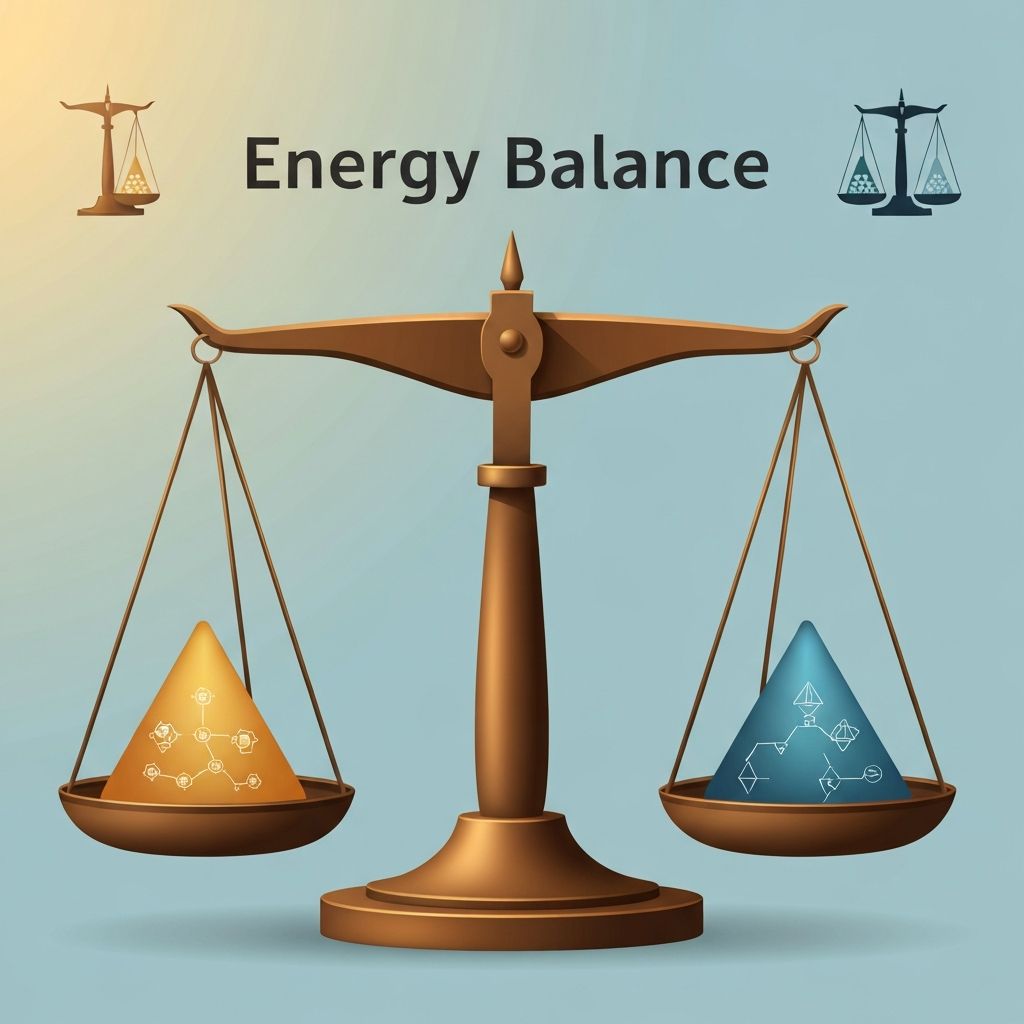
Energy intake represents total calories consumed through food and beverages. This component is influenced by food availability, food choice, portion sizes, and eating behaviors. However, measuring precise energy intake is difficult; individuals often underestimate or overestimate consumption.
Total daily energy expenditure consists of multiple components:
While BMR is relatively stable, activity expenditure varies considerably based on individual behavior patterns.
The body does not alter composition uniformly. When energy surplus exists, muscle gain occurs in conjunction with fat gain, particularly in individuals engaging in resistance training. When energy deficit exists, both muscle and fat are lost; resistance training attenuates muscle loss.
The proportion of muscle versus fat loss during energy deficit depends on protein intake, resistance training volume, and individual factors. High protein intake combined with adequate resistance training preserves lean mass during deficits.
Individual variation is substantial. Genetic factors, training experience, age, and hormonal status influence tissue partitioning—the distribution of energy surplus or deficit between muscle and fat compartments.
When energy intake is restricted substantially, the body initiates adaptive responses including decreased sympathetic nervous system activity, reduced spontaneous movement, and improved metabolic efficiency. These adaptations partially offset intended energy deficits but do not prevent body composition change.
Body composition changes require sustained energy balance over extended periods. Short-term dietary compliance is insufficient; meaningful change emerges from consistent lifestyle patterns. This reality has important implications for dietary approach selection.
Sustainable dietary approaches are those an individual can maintain long-term while meeting nutritional needs and personal preferences. Flexibility—the ability to incorporate preferred foods while maintaining consistency—often predicts long-term adherence better than dietary perfection.
While energy balance remains fundamental, numerous factors influence the system:
Energy balance operates as the foundation, but these contextual factors substantially influence practical success. Understanding body composition science enables selection of evidence-informed approaches compatible with individual circumstances.